
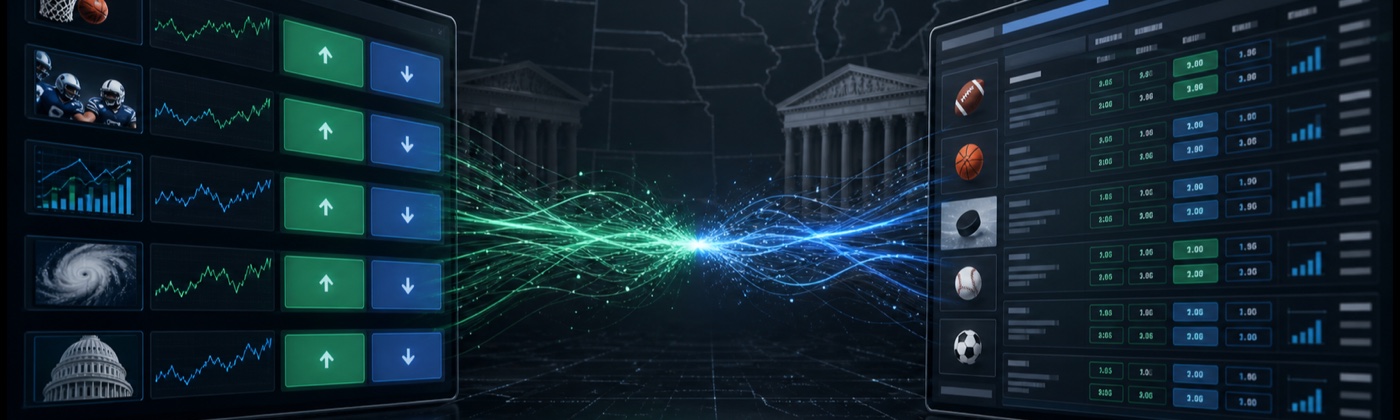
Ein US-Regulierungsstreit um Sportveranstaltungsverträge steuert auf einen potenziell wegweisenden Präzedenzfall vor dem Obersten Gerichtshof zu.
Im unmittelbaren Streit geht es um Kalshi, New Jersey und die Abgrenzung zwischen der bundesstaatlichen Aufsicht über Derivate und dem Glücksspielrecht der einzelnen Bundesstaaten. Die weitergehende Frage ist für iGaming von größerer Bedeutung: Werden Prognosemärkte ein eigenständiges Finanzmarktprodukt bleiben, eher wie Sportwetten behandelt werden oder sich in einem hybriden Rahmen entwickeln?
Was ist geschehen?
Die staatlichen Regulierungsbehörden argumentierten, dass Produkte, die an Sportereignisse gekoppelt sind, unter das staatliche Glücksspielrecht fallen und daher nicht die Lizenzierungs-, Verbraucherschutz- und Integritätsanforderungen umgehen sollten.
Kalshi ist ein von der CFTC regulierter designierter Vertragsmarkt und argumentiert, dass qualifizierte Ereignisverträge Derivate im Sinne des Commodity Exchange Act darstellen, wodurch die CFTC die ausschließliche Zuständigkeit besitzt.
Im April 2026 bestätigte das Bundesberufungsgericht eine einstweilige Verfügung und befand, dass Kalshi hinreichende Erfolgsaussichten mit seiner Argumentation der Bundespräemption dargelegt habe. Es handelte sich nicht um ein endgültiges Urteil in der Sache.
In der Petition werden die Richter gebeten zu entscheiden, ob Bundesstaaten Glücksspielregeln auch auf Sportwetten anwenden dürfen, die auf bundesweit regulierten Vorhersagemärkten angeboten werden. Ein kürzlich ergangenes Urteil des Neunten Bundesberufungsgerichts im Streitfall Nevada deutet in eine andere Richtung und erhöht den Druck auf eine bundesweite Klarstellung.
Der Streitfall geht daher über einen einzelnen Betreiber hinaus. Er prüft die Grenze zwischen der von der CFTC beanspruchten ausschließlichen Zuständigkeit für Ereignisvertragsmärkte und der Befugnis staatlicher und indigener Glücksspielbehörden, Produkte zu kontrollieren, die Sportwetten ähneln und sich auch so verhalten können.
Warum Vorhersagemärkte wachsen
Vorhersagemärkte machen den Ausgang eines zukünftigen Ereignisses zu einem handelbaren Vertrag. Ein typischer Markt bietet Positionen wie „Ja“ und „Nein“, wobei sich die Preise ändern, wenn die Teilnehmer die Wahrscheinlichkeit neu bewerten. Das Modell lässt sich über den Sport hinaus auf Wirtschaft, Politik, Unterhaltung, Wetter und andere messbare Ereignisse ausweiten.
Aufbau einer bundesweit regulierten Börse für Ereigniskontrakte und zentrale Rolle im Streit zwischen Bundes- und Landesgerichtsbarkeit.
Etablierung von Prognosemärkten in der breiten politischen, medialen und kulturellen Diskussion und Entwicklung einer regulierten Marktstruktur in den USA.
Übernahme von Railbird und Entwicklung von DraftKings Predictions, was zeigt, dass etablierte Sportwettenanbieter den Handel mit Ereigniskontrakten als strategische Produktkategorie betrachten.
Fanatics Markets wurde eingeführt und bietet seitdem eine kombinierte App-Plattform für Sportwetten, Casino- und Prognoseprodukte an, sofern dies zulässig ist.
Das Wachstum wird durch eine breite Marktabdeckung, nationale Vertriebsziele, vertraute Handelsschnittstellen und die Möglichkeit, Event-Kontrakte auch dort anzubieten, wo herkömmliche Online-Sportwetten nicht verfügbar sind, vorangetrieben. Letzteres ist auch der Grund für die zunehmenden regulatorischen Herausforderungen.
Prognosemärkte vs. traditionelle Sportwettenanbieter
| Bereich | Prognosemärkte | Traditionelle Sportwettenanbieter |
|---|---|---|
| Produktmodell | Teilnehmer handeln Event-Kontrakte in der Regel über eine Börse oder Marktstruktur. | Der Betreiber nimmt Wetten an, legt Quoten fest oder verteilt diese und verwaltet das Risiko. |
| Regulierung | CFTC- und Commodity Exchange Act-Rahmen für registrierte Märkte; Die staatliche Autorität bleibt umstritten. | Staatliche oder Stammes-Glücksspielregulierung, Lizenzierung und marktspezifische Regeln. |
| Marktumfang | Sport plus Politik, Wirtschaft, Kultur, Wetter und andere objektiv auflösbare Ereignisse. | Sportorientierte Pre-Match-, Live-, Proposition-, Futures- und Parlay-Produkte. |
| Wirtschaftswissenschaften | Handelsgebühren, Spreads und Liquidität stehen im Mittelpunkt des Modells. | Hold, Preisspanne, Haftung und Handelsleistung bestimmen die Wirtschaftlichkeit. |
| Infrastruktur | Vertragslebenszyklus, Auftragsabgleich, Marktdaten, Überwachung, Clearing und Abwicklung. | Quoten-Feeds, Wettplatzierung, Limits, Risikomanagement, Abrechnung und Kontrolle der Sportintegrität. |
Die Customer Journey mag immer ähnlicher aussehen, aber der regulatorische Rahmen, die Marktmechanismen und die operativen Verantwortlichkeiten sind nicht austauschbar.
Warum das für iGaming-Betreiber wichtig ist
Jahrelang basierten viele Betreiber-Roadmaps auf zwei Hauptbranchen: Casino und Sportwetten. Prognosemärkte führen eine dritte Produktlogik, einen anderen Regulierungsweg und eine Reihe neuer technischer Abhängigkeiten ein. Gleichzeitig zeigen Gewinnspielprodukte weiterhin die Nachfrage nach alternativen Spielmodellen in den Vereinigten Staaten.
Die Betreiber beginnen daher, Möglichkeiten zu prüfen, die über das herkömmliche Casino-plus-Sportwetten-Paket hinausgehen. Die strategische Frage ist nicht mehr nur, welche Branche eingeführt werden soll. Es geht darum, ob die zugrunde liegende Plattform Produkte hinzufügen, entfernen oder isolieren kann, wenn sich Gesetze, Lizenzen und kommerzielle Prioritäten ändern.
Der Aufstieg von Gaming-Plattformen mit mehreren Produkten
Eine Mehrproduktstrategie bedeutet nicht, dass jede Branche dieselbe Lizenz, dieselbe juristische Person oder dasselbe betriebliche Regelwerk haben sollte. Das bedeutet, dass die Technologiearchitektur modular genug sein sollte, um gegebenenfalls gemeinsame Funktionen zu unterstützen und gleichzeitig produktspezifische Wallets, Kontrollen, Berichte und Compliance-Grenzen bei Bedarf beizubehalten.
Technologische Herausforderungen
Ein Kundenprofil mit produktspezifischen Berechtigungen, Berechtigungen und Kontrollen zur verantwortungsvollen Nutzung.
Klare Trennung von Bargeld, Bonus, Gewinnspielwährungen, offenen Positionen, Exposure und Abwicklung.
Alters-, Identitäts-, Sanktions-, Standort- und Produktzugriffskontrollen werden in der richtigen Phase durchgeführt.
Routing, Ein- und Auszahlungskontrollen, Rückbuchungen, Abgleich und Anbieterbeschränkungen.
Wettrisiken, Marktmanipulation, verdächtige Aktivitäten, Handelsverhalten und Integritätswarnungen.
Produktspezifische Einnahmen, Gebühren, Verbindlichkeiten, steuerliche Behandlung, behördliche Aufzeichnungen und Prüfungshistorie.
Regeln, die je nach Produkt, Gerichtsbarkeit, Kundenstatus und regulatorischem Rahmen variieren.
Sportwetten, Casino-Inhalte, Marktdaten, Zahlung, KYC, CRM, Messaging und externe Berichtssysteme.
Was kommt als nächstes?
Der Oberste Gerichtshof kann die Petition von New Jersey annehmen, ablehnen oder auf die Entwicklung weiterer Fälle warten. Unterdessen verfolgt die CFTC die Ausarbeitung von Vorschriften und Gerichtsverfahren, Staaten verteidigen ihre Glücksspielautorität und kommerzielle Plattformen entwickeln weiterhin Produkte.
Ein endgültiges Gerichtsurteil könnte darüber entscheiden, ob sich Sportveranstaltungsverträge als landesweit vertriebenes Derivatprodukt entwickeln, bundesstaatlichen Glücksspielkontrollen unterliegen oder ein neues Gleichgewicht zwischen den beiden Systemen erfordern. Für Betreiber besteht die sinnvolle Reaktion in der Szenarioplanung: Aufbau einer Architektur, die sich anpassen lässt, ohne davon auszugehen, dass der heutige Regulierungsweg unverändert bleibt.
Infrastruktur muss mehr als eine Vertikale unterstützen
Die nächste Generation von Gaming-Plattformen muss mehr als eine einzelne Branche unterstützen. Betreiber benötigen zunehmend eine flexible Infrastruktur, die in der Lage ist, Casinos, Sportwetten, Gewinnspiele und neue Wettmodelle in ein Ökosystem zu integrieren.
Das erfordert einen modularen Kern, eine konfigurierbare Player- und Wallet-Logik, integrationsbereite Dienste und ein Reporting, das klare Produkt- und Gerichtsbarkeitsgrenzen wahren kann. Das Ziel besteht nicht darin, verschiedene Produkte in ein Betriebsmodell zu zwingen, sondern den Betreibern eine Plattform zu bieten, die sich mit dem Markt weiterentwickeln kann.
Entdecken Sie die Lösungen von Frently
Einführung oder Ersetzung der Casino- und Sportwetten-Infrastruktur. Kernplattform
PAM, Wallet, Backoffice, CMS, Kontrollen und Reporting. Gewinnspielplattform
Fahrten und Gewinnspiele in zwei Währungen. Managed Services
Betriebliche Unterstützung für Plattform, Zahlungen, CRM und Berichterstattung.
Besprechen Sie eine Plattform für mehrere Produkte
Quellen und weiterführende Literatur
- Reuters: New Jersey bringt den Kalshi-Prognosemarktstreit vor den Obersten Gerichtshof der USA
- Drittes Gutachten: KalshiEX LLC gegen Flaherty
- CFTC: Prediction Markets Vorankündigung der vorgeschlagenen Regelsetzung
- CFTC: Prediction Markets Advisory
- DraftKings: Railbird-Akquise und Prognosemarktstrategie
- Fanatics: Einführung von Fanatics-Märkten
Dieser Artikel ist ein Marktkommentar, keine Rechtsberatung. Die Regeln für Prognosemärkte, Sportwetten und Gewinnspiele ändern sich schnell. Betreiber sollten vor der Einführung oder Änderung eines Produkts länderspezifische Rechts- und Regulierungsberatung einholen.
Teilen an: